Apple Wins EU Challenge Over Keyboard Maker’s Citrus Logo
Apple objected to a European trademark filing from a Chinese keyboard maker because the logo the company wanted to use was too close to Apple’s own logo. The EU Intellectual Property Office (EUIPO) partially refused to grant a European Union Trade Mark after Apple opposed the filing.
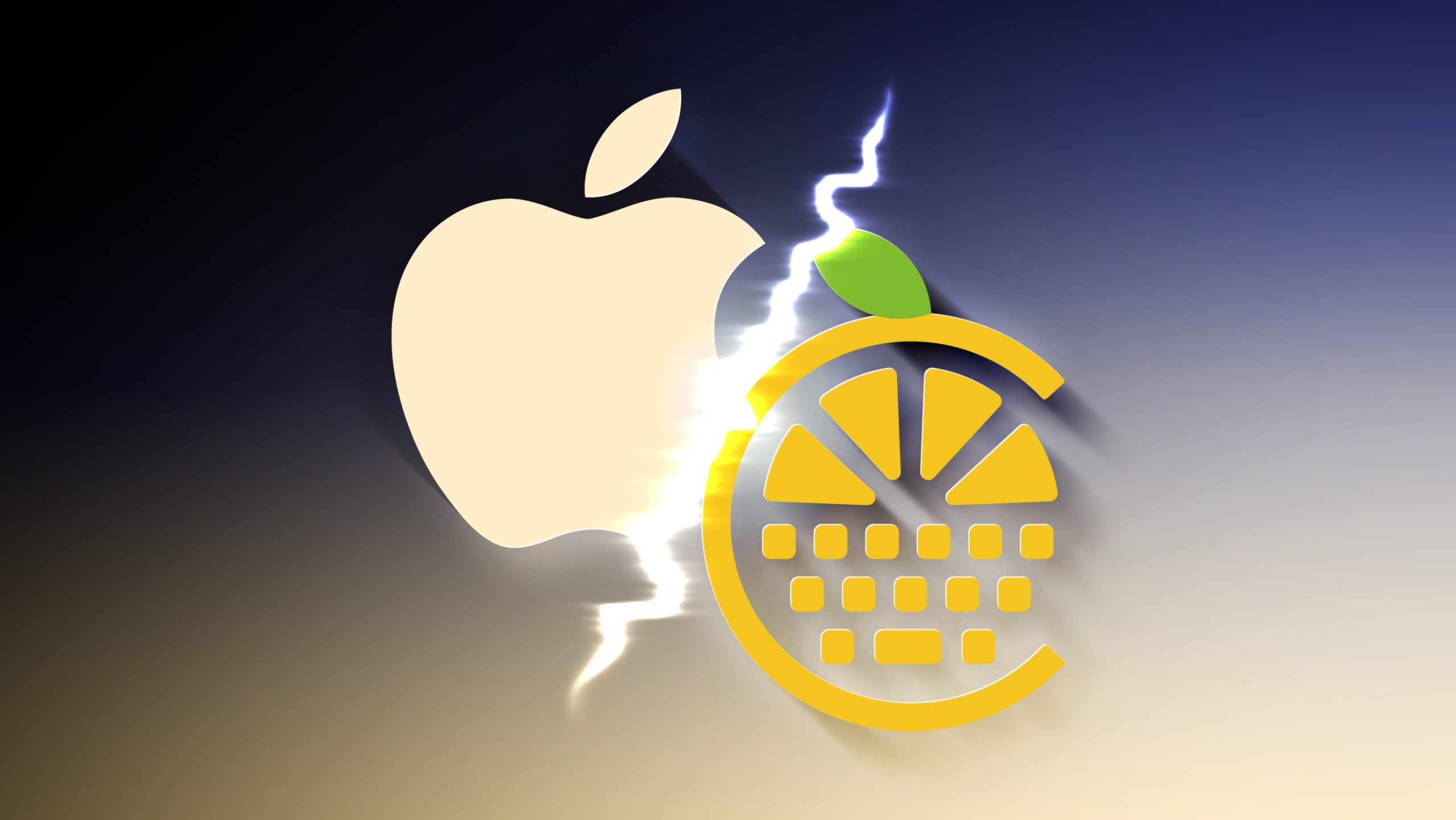
The company, Yichun Qinningmeng Electronics Co., makes mechanical keyboards and keycaps, according to its website, though it also seems to sell solar panels. The logo the company uses is a citrus fruit with the bottom segments turned into keyboard keys, with a green leaf angled to the left at the top of the fruit and a missing section on the right side. Part of the company’s name translates to a citrus fruit, which is likely the reason behind the design.
Apple argued that the logo resembled an apple with a detached leaf and a bite, which the EUIPO did not agree with. It found the perfectly round shape of the logo did not track with the shape of an apple, and that it looked more like an orange.
The opponent argues that the figurative element of the contested sign also consists of an apple device with a detached leaf and a bite. However, the body of the figurative element consists of a circle (despite the missing part) and apples are not perfectly round. Furthermore, apples are not normally depicted in such a shape which is, in any case, more akin to an orange or other round-shaped fruits.
Therefore, while the Opposition Division agrees that the figurative element of the contested sign is likely to be perceived as depicting a fruit of some sort and that the detached oblong shape is therefore also likely to be perceived as depicting a leaf, in view of its round shape together with the relatively generic leaf shape, it will not be immediately associated with any fruit in particular but rather with a round-shaped fruit in general.
It follows from the above that, in the present case, the relevant public will perceive the contested application as a highly stylised round-shaped fruit bearing additional fanciful figurative elements. In particular, the triangular shapes, due to their arrangement, may be seen as segments. Furthermore, the square and rectangular figures in the lower part, again by virtue of their arrangement, may evoke a keyboard.
The EUIPO did acknowledge that there were some “minor commonalities” between the two designs, but also noted numerous differences. Overall, the two logos were found to be “visually similar, albeit to a very low degree,” and the EUIPO concluded that the “signs are not conceptually similar.”
Even though the EUIPO did not feel that the citrus fruit logo looked like an apple, it largely decided in Apple’s favor because of the strength of Apple’s reputation in the EU and the potential for customers to “establish a mental ‘link’ between the signs.”
Apple claimed the citrus fruit logo would take unfair advantage of Apple’s reputation, and the EU agreed. Apple’s argument:
Given the immense reputation of the Opponent’s Earlier Mark, it is hard to believe that the Applicant’s intention was not, at the very least, to bring the Opponent’s Apple Logo to mind in some way. More likely, the Application represents a deliberate attempt to take advantage of that reputation to offer identical and highly similar goods. As a result, the addressed public, when confronted with the Applicant’s sign, will wrongly assume that the Application indicates a connection to Apple (i.e. that the Applicant is a supplier or manufacturer).
Yichun Qinningmeng Electronics Co. is not able to continue with the trademark process for keyboards or any other related computer goods, but the application to use the logo for solar panels will proceed. The company is able to file a notice of appeal in the next two months.
Apple and Yichun Qinningmeng Electronics Co. also had a trademark dispute in the U.S., but the trademark application was terminated after the Chinese company failed to respond in opposition proceedings.
Apple has objected to fruit-related logos several times in the past. It sued the developers behind an app named Prepear because the app used a pear-shaped logo that had a leaf, and it objected to an apple logo used by a Norwegian political party. Apple opposes dozens of trademark applications every year in the U.S. and other countries.Tags: European Union, TrademarkThis article, “Apple Wins EU Challenge Over Keyboard Maker’s Citrus Logo” first appeared on MacRumors.comDiscuss this article in our forumsMacRumors: Mac News and Rumors – Front PageRead More